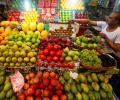
The Reserve Bank on Wednesday projected retail inflation to ease to 5.3 per cent in next fiscal from 6.5 per cent this year on assumptions of lower imported inflation, even though core inflation remains sticky. The RBI's inflation outlook for current fiscal has improved from 6.8 per cent projected earlier, to 6.5 per cent, on the back of steeper than expected decline in vegetable prices and Indian basket of crude at $95 a barrel. "Looking ahead, while inflation is expected to moderate in 2023-24, it is likely to rule above the 4 per cent target.

Global rating agency Moody's on Monday said the high commodity prices and supply chain disruptions due to further escalation in the Russia-Ukraine crisis could expose about 42 per cent of rated Indian companies to significant risks. They are mainly in the oil and gas and automotive sectors. The impact may be seen under two scenarios: first, revised base line and second being downside economic scenarios incorporating a global recession and a more severe liquidity squeeze, it said. The military conflict between Russia and Ukraine is impacting companies in Asia Pacific, adding to existing challenges from supply chain disruption and the coronavirus pandemic.

With the deregulation of petrol prices, the future looks grim for the Indian consumers.
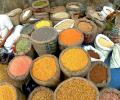
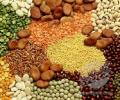
After a steady surge, prices of pulses, except those of urad and masoor to some extent, are showing signs of stabilising amid a revival of monsoon rains over major growing areas of Maharashtra and Karnataka, and on expectations of a rise in imports. Chana prices, which too had moved up in recent months, have dropped by almost 3 per cent since the end of August due to increased liquidation of government stocks, official data shows. Monsoon rains seem to have benefitted the standing soybean crop as well.

While seven of the suspended MPs belonged to the TMC, six were from the DMK, three from the Telangana Rashtra Samithi, two from the Communist Party of India-Marxist and one from the Communist Party of India.

As a result of the government's policies, 'some big trading companies as well as hoarders are making huge profits while the income of common people is being looted through high prices,' the party's Politburo said.

Hindustan Unilever Ltd on Friday reported a 1.08 per cent increase in consolidated net profit at Rs 2,508 crore in the third quarter ended December 2023. The company had posted a consolidated net profit of Rs 2,481 crore in the same quarter last fiscal, Hindustan Unilever Ltd (HUL) said in a regulatory filing. Its revenue from sales of products was marginally down to Rs 15,259 crore during the quarter.

As India looks to mend its Covid-battered economy, one thing that will grab the attention of all concerned is the path that both wholesale and retail inflation will follow. Even the Reserve Bank of India in its latest policy statement said, "Going forward, the inflation trajectory is likely to be shaped by uncertainties impinging on the upside and the downside.

India's fast-moving consumer goods (FMCG) sector grew 5.7 per cent by value and 4.1 per cent by volume in the July-September quarter driven by rural demand, consumer intelligence firm NielsenIQ said in its quarterly update on Thursday. Price-led growth stood at 1.5 per cent. According to NielsenIQ data, rural volume growth outpaced urban markets for the third straight quarter despite consumption softening in both regions.

Demonetisation was not a good idea and the time should have been utilised instead to fine-tune the Goods and Services Tax before it was introduced, said Gita Gopinath, John Zwaanstra Professor of International Studies and of Economics at Harvard University, in an interview with Advait Rao Palepu.

Britain's 'remain' option gaining traction, with the implied probability of such an outcome at 78 per cent.
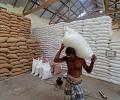
Amid the ongoing festival season and ahead of the elections for five state assemblies, the Centre is closely monitoring inflation, particularly in food items, to enable it to take steps to increase their supplies. "There is a complete no-nonsense attitude when it comes to food inflation, and instructions have been issued at all levels to be very sensitive to any possible price movements in any commodity," a senior official explained. Sources have said that all departments dealing with food items have been instructed to keep a close eye on all commodities and maintain a weekly record of their price movements.

Sounding a note of caution, the Reserve Bank said on Friday said there is a risk of high wholesale price inflation (WPI) putting pressure on the retail inflation, albeit with a lag. In its annual report, the RBI said that the cost-push pressures from high industrial raw material prices, transportation costs and global logistics, and supply chain bottlenecks continue to impinge on core inflation. "The substantial wedge between wholesale and retail price inflation amidst a sharp rise in manufactured products' inflation poses the risk of a possible passthrough of input cost pressures to retail inflation with a lag, although slack in the economy is muting the pass-through," the central bank noted.

'The potential headwind is that the Indian economy is likely to see a slowdown in growth rates over the next two years.'

The Interim Budget for 2024-25 (FY25) to be presented on February 1 is likely to assume 10-10.5 per cent nominal gross domestic product (GDP) growth against 8.9 per cent estimated for FY24 by the National Statistical Office (NSO). "We were waiting for the First Advance Estimates GDP numbers for FY24. "We will finalise the nominal GDP growth assumption for FY25 Interim Budget in a couple of days.

'In the medium to long term mid-caps tend to generate higher returns, albeit with increased volatility.'

Criticising Prime Minister Manmohan Singh's advice not to politicise the issue of price rise, Bihar Chief Minister Nitish Kumar said on Monday when high price of essential commodities hit people hard then it was the responsibility of the political parties to raise the issue and the ruling party to address it. "The people are hard hit whenever prices are increased and the ruling party has to resolve it," Kumar who was here to attend a wedding, told newsmen in Ranchi.

The wholesale price-based inflation declined to over two-year low of 3.85 per cent in January on easing prices of manufactured items, fuel and power, even though food articles remained expensive. This is the ninth straight month of decline in the rate of wholesale price-index (WPI) based inflation. The WPI inflation was 4.73 per cent in January and 13.43 per cent in February, last year.

'Higher interest rates make gold less attractive as it doesn't generate yield.' 'However, with rates set to fall, the tables are turning for gold.'

The wholesale price-based inflation in February rose to 13.11 per cent on hardening of prices of crude oil and non-food items, even though food articles softened. After two months of mild easing, WPI inflation accelerated in February and remained in double digits for the 11th consecutive month, beginning April 2021. WPI inflation last month was 12.96 per cent, while in February last year, it was 4.83 per cent. The rise in crude oil and natural gas prices after the Russian invasion of Ukraine, beginning February 24, has put pressure on the wholesale price index, even though food articles saw softening across categories of vegetables to pulses to protein-rich items.
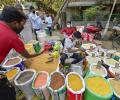
India's consumer price index (CPI)-based inflation could ease in the coming months thanks to the arrival of kharif crops, lower international commodity prices, and a pass through of lower input costs to consumers, the finance ministry said in its Monthly Economic Review (MER) for October, which was released on Thursday. The MER, however, warned that the global macroeconomic situation remained precarious and a recession in many advanced economies would impact India's exports. "Easing international commodity prices and new Kharif arrival are set to dampen inflationary pressures in the coming months.

'The long-term impact of elections is minimal.'
During an informal chat, economist Abhirup Sarkar explained in a layperson's terms why the prices in India are escalating so fast.
Charging the Centre of not doing anything to check the prices of essential commodities, the Bharatiya Janata Party said the increase was not just due to bad management but also a result of corruption.

Buying a car, particularly a diesel-powered one, is set to pinch the customers' pockets even more from the next financial year, as the second phase of Bharat Stage VI (BSVI) emission norms kicks in. The rules require cars to be compliant with real driving emission (RDE) norms, which measure pollutants emitted by cars while they are being driven on the road, unlike in a laboratory test. The norms may increase the cost of producing diesel vehicles by nearly Rs 75,000 to Rs 80,000, and petrol-powered ones by Rs 25,000 to Rs 30,000, analysts said.
Inflation shot up by 0.1 per cent to over 41-month high of 7.61 per cent week ended July 31, mainly due to surge in prices of fruit and vegetables, edible oil and other manufactured products.

The cement sector may be looking at better realisations and higher volume offtake going by the trends of the October-December quarter of the 2022-23 financial year (Q3FY23), a recent price hike, and the promise of a continued infrastructure thrust in FY24. In Q3, revenues rose by an aggregate of 17 per cent year-on-year (YoY), but Ebitda (earnings before interest, tax, depreciation and amortisation) per tonne, fell by 14 per cent YoY while profit after tax (PAT) rose by 23 per cent YoY. Expenses were up 30 per cent per tonne YoY - power and fuel costs in particular - and that's no surprise given the rise in fossil fuel prices.

Rising oil prices and firming up of global and domestic food prices are likely to have a significant impact on inflation outlook in 2011, a top RBI official said.

The Reserve Bank's rate-setting panel, Monetary Policy Committee (MPC), began its three-day deliberations on Wednesday amid expectations of a status quo on benchmark rate mainly on account of uncertainty over the impact of the second wave of COVID-19 pandemic. Moreover, the fears of firming inflation may also refrain the MPC from tinkering with the interest rate in its bi-monthly monetary policy outcome to be announced on Friday. The RBI had kept key interest rates unchanged at the last MPC meeting held in April.

The industry feels that prices of active pharmaceutical ingredients (APIs) can go up in the range of 5-15 per cent.

'A 10 to 15 per cent allocation to gold in portfolios reduces risk without compromising on potential returns.'

'It has also outlived its initial purpose of reducing physical gold imports.'

'Earnings will be the catalyst for markets to march higher from here on out.'

The revised projection comes after a 17% rise in the April-June.
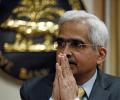
RBI Governor Shaktikanta Das on Friday said the government and the central bank are in discussion with South Asian countries to have cross-border trade in rupee. He also said the central bank digital currency (CBDC) is in trial phase and the RBI is moving very carefully and cautiously on digital rupee launch. After the successful launch of the wholesale pilot, the Reserve Bank of India (RBI) on December 1, last year, began its retail CBDC pilot project.
Members of the four Left parties and the Samajwadi Party on Friday walked out of the Lok Sabha to protest the government's 'lack of response' to their demand for a white paper on the rise in prices of essential commodities, especially food articles.Raising the issue, Communist Party of India - Marxist's Basudeb Acharia sought a white paper on the price situation, saying the government had 'failed' to take any steps to curb the rising trend of prices.

The FMCG industry hopes for a revival in consumption growth in 2025 with some 'green shoots' already visible, after having a challenging year amid escalating input costs and a double-digit rise in food inflation, which ultimately slowed down the pace of the urban market growth in the second half of 2024. Soaring prices of commodities such as palm oil, coffee, cocoa and wheat forced FMCG players to go for a hike of 3 to 5 per cent or resort to shrinkflation by reducing pack sizes and grammage to retain attractive price points, fearing a volume loss.

'We expect market consolidation and recommend buying during market dips.'
The Rajya Sabha later passed the vote on account and supplementary demands for grants by voice vote enabling the government to meet necessary expenditure pending passage of the Budget by Parliament. With the Upper House approving the vote on account, Parliament on Monday completed the first stage of budgetary exercise for 2008-09. The vote on account was approved by Lok Sabha last week.
